Hereditary Cancer Spotlight: Ovarian Cancer
☑ Quick summary
Up to 20% of ovarian cancers are hereditary, caused by inherited mutations tied to syndromes such as HBOC and Lynch syndrome. Germline testing identifies who is at increased risk — and which relatives should be tested.
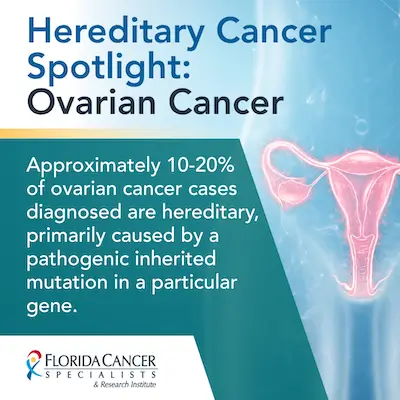
10-20%
of ovarian cancer cases are hereditary
21,000
U.S. women diagnosed each year
~1%
of U.S. women are affected by ovarian cancer
5
inherited syndromes linked to ovarian cancer risk
✦ Did you know?
Germline testing looks at inherited DNA present in every cell of the body and can be passed from parent to child — different from somatic testing, which looks for changes that occur within a specific tumor after birth.
⚠ Consider testing if
- • Significant family history of breast, ovarian or related cancers, especially in first-degree relatives
- • Moderate family history of breast and ovarian cancers with Ashkenazi or Eastern European Jewish ancestry
- • Personal history of breast cancer meeting criteria for age, cancer type, bilateral disease, ancestry or family history
- • Personal history of ovarian, fallopian tube or primary peritoneal cancer
- • A known BRCA1 or BRCA2 mutation in the family medical history
Ovarian Cancer
Ovarian cancer affects about 1% or 21,000 women in the United States each year. While a majority of ovarian cancers are sporadic, up to 20% of cases are attributed to inherited mutations with strong family history often associated with hereditary syndromes including hereditary breast and ovarian cancer (HBOC), Lynch Syndrome (also known as hereditary non-polyposis colorectal cancer, HNPCC), PTEN tumor hamartoma syndrome, MUTYH-associated polyposis, and Peutz-Jeghers syndrome.
Genetic testing for key germline variants is essential to determine if a patient has a hereditary ovarian cancer predisposition and therefore increased risk of developing ovarian cancer. Germline cancer testing identifies inherited gene changes from DNA that are present in every cell of the body and can be passed from a parent to a child. This is different from somatic testing which looks for changes that occur in a specific tumor after birth. Identifying a pathogenic germline variant associated with ovarian cancer can help prevent the onset of disease in individuals who have not yet developed cancer by directing increased surveillance before cancer develops. Individuals with a pathogenic variant require more frequent screening and monitoring methods, as well as family testing to determine if at-risk relatives have inherited the variant.
Genetic testing for hereditary ovarian cancer should be considered when there is:
- A significant family history of breast, ovarian, or related cancers especially in first-degree relatives (mother, sister, daughter).
- A moderate family health history of breast and ovarian cancers and are of Ashkenazi or Eastern European Jewish ancestry.
- A personal history of breast cancer, and meet certain criteria related to age of diagnosis, type of cancer, presence of certain other cancers or cancers in both breasts, ancestry, and family health history.
- A personal history of ovarian, fallopian, or primary peritoneal cancer.
- A known mutation in BRCA1 or BRCA2 genes in the family medical history.
For more information on genetic testing for hereditary ovarian cancer and related syndromes visit the links below:
- https://myriad.com/patients-families/disease-info/ovarian-cancer/
- https://myriad.com/genetic-tests/myrisk-hereditary-cancer-risk-test/
References
- Flaum N, Crosbie EJ, Edmondson RJ, Smith MJ, Evans DG. Epithelial ovarian cancer risk: A review of the current genetic landscape. Clin Genet. 2020 Jan;97(1):54-63. doi: 10.1111/cge.13566. Epub 2019 May 29. PMID: 31099061; PMCID: PMC7017781.
- https://www.cdc.gov/breast-ovarian-cancer-hereditary/testing/index
- https://www.cancer.org/cancer/types/ovarian-cancer/causes-risks-prevention.html