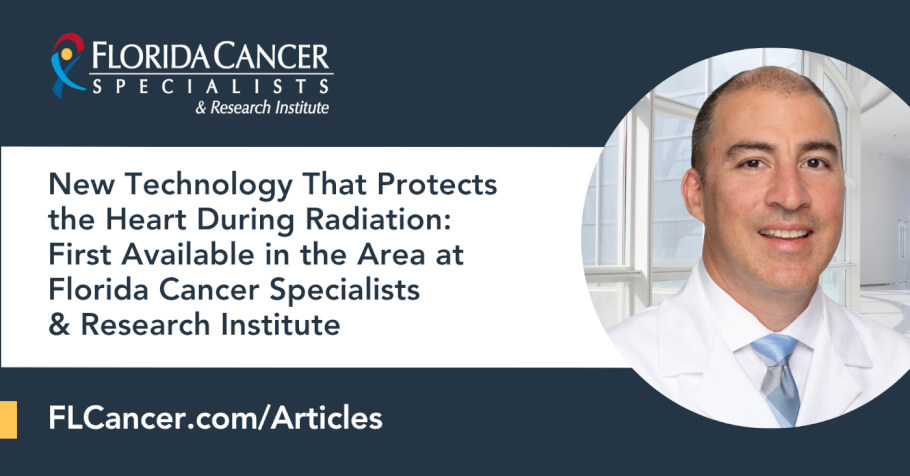
Radiotherapy treatment for prostate cancer
Radiotherapy Services
Services
- 3D Conformal Radiation Therapy
- 3D/IMRT Treatment Planning
- Accelerated Partial Breast Irradiation (APBI)
- Advanced Treatment Planning – Eclipse
- Align RT Therapy (Offered at our Ocala Cancer Center)
- High Dose Rate (HDR) Brachytherapy
- Hyperthermia
- IGRT (Image Guided Radiation Therapy)
- IMRT (Intensity Modulated Radiation Therapy)
- Low Dose Rate (LDR) Brachytherapy – Seed Implants
- Low Dose Radiation Therapy (LDRT)
- Prone Breast Radiation Therapy
- Radiopharmaceutical Therapies (RPT)
- Stereotactic Radiation Therapy (SBRT)
- Stereotactic Radiosurgery (SRS)
Contact Us
Florida Cancer Specialists & Research Institute (FCS) is accredited by the American College of Radiology (ACR) for radiation oncology. FCS earned a three-year accreditation for Radiation Oncology Services. The prestigious ACR Gold-seal designation is awarded to all FCS sites of service.
FCS Radiation Treatments Available
AlignRT/Surface Guided Radiotherapy (SGRT)
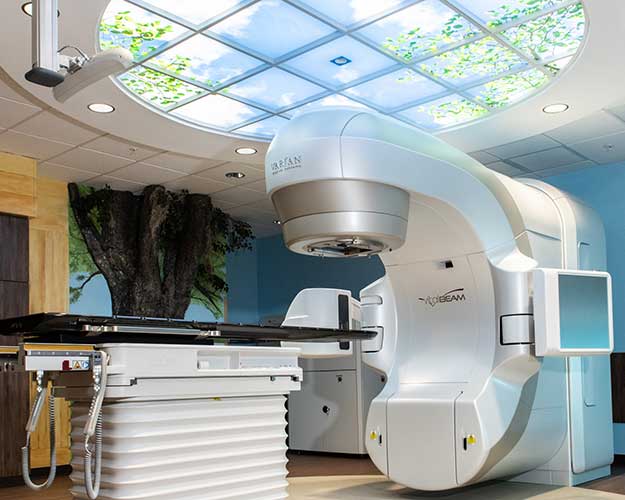
Surface guided radiotherapy (SGRT) uses AlignRT®, three-dimensional camera technology, to enhance the accuracy and effectiveness of radiation. This system monitors thousands of points on the skin with immense accuracy and without contact to ensure that the patient is correctly positioned at all times and that nearby organs are protected. If a patient moves out of the ideal position, the radiation beam will pause automatically, protecting healthy tissues from radiation. Traditional radiation therapy requires the placement of small, but permanent tattoo marks on the skin to help radiation therapists position patients for treatment. SGRT eliminates the need for any permanent markings, often unwelcome reminders of cancer treatment. SGRT also enables the use of Deep Inspiration Breath Hold, a technique that involves taking a deep breath to move the breast away from the heart during radiation therapy. Unlike traditional methods of blocking the heart, this technique creates more separation between a tumor and the heart, making breast cancer treatment more precise. As an alternative for patients who cannot hold their breath or who have large breasts, the technique can be used to deliver radiation treatment in the prone position (lying on the stomach). Additionally, SGRT allows for the use of an open mask to help position the head during treatment for brain or head and neck cancers. The traditional closed mask can be particularly challenging for patients who are claustrophobic. Read the case study here. Back to Top
Brachytherapy
Brachytherapy is the temporary or permanent placement of a radioactive source either on or within body tissues or cavities. Brachytherapy allows the delivery of a high dose of radiation to a small area while sparing the amount of surrounding normal tissue that is irradiated, additionally it allows a physician to use a higher total dose of radiation to treat a smaller area in a shorter amount of time. The implant may be temporary or permanent. During temporary brachytherapy, a radioactive material is placed inside a catheter for a specific amount of time and then withdrawn. Temporary brachytherapy can be administered at a low-dose rate (LDR) or high-dose rate (HDR). Permanent brachytherapy is an interstitial implant. It is a radioactive source that is contained within a needle, seed, wire or catheter which is placed directly in the tumor or tumor bed. Permanent implants, also known as seed implantation, are LDR brachytherapy treatments that utilize radioactive materials, seeds, or pellets, that are implanted permanently within the tumor to provide highly localized radiation. After several months, the radioactivity level of the implants eventually diminishes to nothing. The inactive seeds remain in the body but have no lasting effect on the patient. Back to Top
Breast Brachytherapy (SAVI)
A form of partial breast radiation using HDR brachytherapy for select cases only. Utilizes a catheter device that can be custom fitted to the lumpectomy cavity at the time of surgery, regardless of shape or size. Restricts the radiation to tumor bed, sparing radiation to healthy surrounding tissue. Reduces the potential for side effects. Advantage is that it can be completed in five days utilizing treatment in the morning and in the afternoon with at least six hours in between. FDA approved in 2006. Back to Top
Image Guided Radiotherapy (IGRT)
IGRT is the use of daily imaging during a course of radiation therapy to guide in the precise and accurate delivery of radiation therapy. Machines equipped with IGRT technology allow the physician to image the tumor before or during the time radiation is being delivered while the patient is on the treatment table in treatment position. Specialized software is then used to compare the images to the reference images taken at the time of simulation. These daily images allow any necessary adjustments to be made to the patient’s position prior to the delivery of radiation therapy. A benefit of IGRT is increased dosage levels of radiation to the tumor while sparing the surrounding healthy tissues. Additionally, it reduces the possible side effects of radiotherapy. Back to Top
Intensity Modulated Radiation Therapy (IMRT)
IMRT is a high-precision mode of radiotherapy that delivers precise doses of radiation to a tumor. IMRT allows for the radiation dose to conform more precisely to the three-dimensional shape of the tumor with the use of collimation and multi-leaf collimators (MLC). MLC’s are a device that consists of a number of ‘fingers’ or ‘leaves’ which project into the primary beam to create the required shape. IMRT also allows higher radiation doses to be distributed to the tumor while sparing the surrounding organs and tissues. Combinations of multiple intensity-modulated fields coming from multiple beam directions produce a custom radiation dose that maximizes tumor dose while minimizing the dose to adjacent normal tissues. Lower doses to healthy normal tissues may result in fewer complications or side effects. Types of tumors that may be treated with IMRT include head & neck cancer, brain, prostate, spinal cord or tumors very close to radiosensitive normal tissues. Back to Top
Low Dose Radiation Therapy (LDRT)
Low dose radiation therapy (LDRT) uses carefully controlled, small amounts of radiation to target specific areas of the body. Unlike higher doses used to treat cancer, low doses are designed to reduce inflammation, relieve pain, or help manage certain medical conditions with minimal side effects. The treatment is usually delivered in short sessions over a few days or weeks and is monitored closely by healthcare professionals to ensure safety and effectiveness. LDRT is intended to provide symptom relief and improve quality of life, minimizing risk to healthy tissue and overall health.Back to Top
On-Board Imager
This is a digital imaging device mounted on the linear accelerator via robotically controlled arms that operate along three axes of motion enabling them to be positioned optimally for the best possible view of the tumor. It produces high-resolution images of the tumor in order to show changes in tumor shape, size or position throughout the duration of the treatment. Back to Top
Radiopharmaceutical Therapy (RPT)
Radiopharmaceutical therapy (RPT) is a targeted drug therapy that combines a chemical compound (called a ligand) with a radioactive particle (called a therapeutic radioisotope). When infused into the bloodstream the therapy locates the cancer in the body and delivers a microscopic amount of radiation directly to the tumor cells. The goal is to damage and destroy the cancerous cells while sparing most healthy tissue.
FCS currently offers three radiopharmaceutical therapies:
Stereotactic Radiosurgery (SRS)
SRS is a non-surgical radiation therapy used to treat small tumors. Each patient’s plan is created using precisely targeted radiation fields which are used to destroy cancerous cells while preserving and minimizing radiation to healthy surrounding tissue. Due to its accuracy and small fields, SRS is ideal for tumors in the brain or spinal cord. When SRS is used to treat tumors in the body, it is called Stereotactic Body Radiotherapy (SBRT). SRS and SBRT are typically performed on an outpatient basis. Unlike conventional external beam radiation therapy, SRS and SBRT are normally provided in 1 to 5 treatments. Back to Top