FCS Issues Call for Action to Protect Timely Access to Cancer Care
Florida Cancer Specialists & Research Institute Issues Call for Action to Protect Timely Access to Cancer Care
New National Survey Details Escalating Payer Management Barriers Threatening Timely, Physician-Led Cancer Care
Fort Myers, Fla., May 6, 2026 – Findings from a new national survey conducted through a collaboration between Florida Cancer Specialists & Research Institute, LLC (FCS) and Avalere Health, reveals that administrative hurdles and delays increasingly are disrupting timely, evidence-based cancer care in community oncology—underscoring the urgent need for policy action to protect patient access and physician-led decision-making.
The study findings are detailed in an FCS report, Shining a Light on Payer Management in Medical‑Benefit Oncology: A Call for Action to Prioritize Patient Care, recently published in the Journal of Clinical Pathways.
“Oncology care is not one‑size‑fits‑all,” said Lucio N. Gordan, MD, president & managing physician of FCS, Florida’s largest community oncology practice. “Treatment decisions must be driven by clinical evidence and the needs of each individual patient, not constrained by coverage restrictions.”
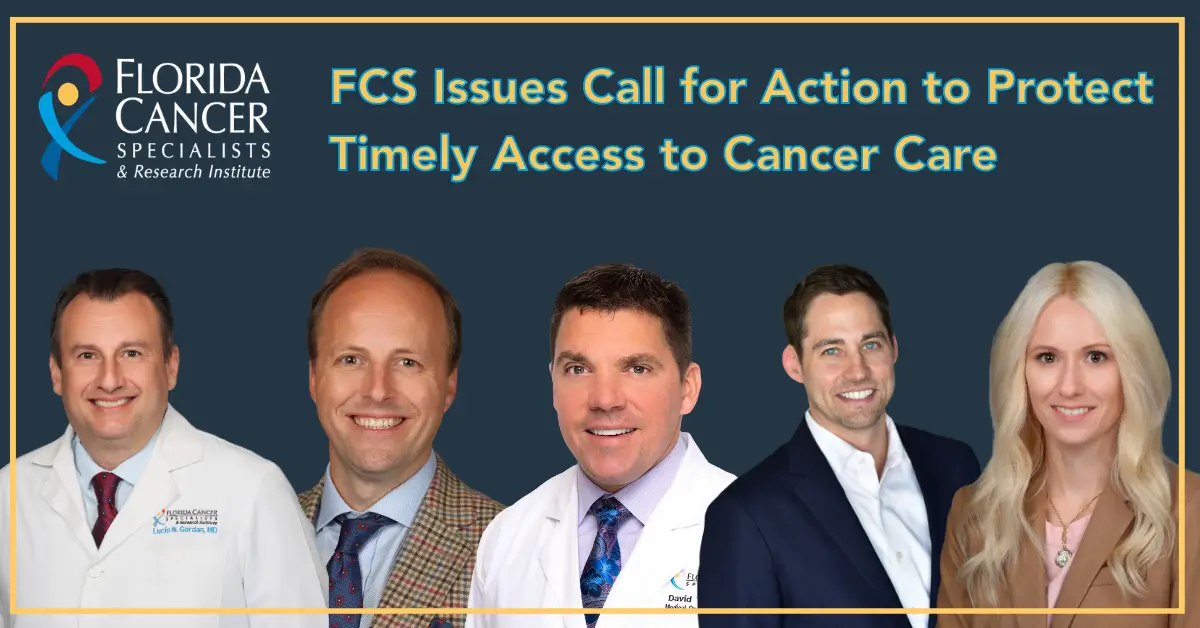
In addition to Dr. Gordan, contributing authors from the statewide practice are David Wenk, MD, assistant managing physician; Ryan Ciarrocchi, chief executive officer; Josh Eaves, chief development & strategy officer; and Kiana Mehring, MBA, PPMC, vice president, payer strategy & revenue cycle management.
Total cancer‑related costs are now the single largest spending category for both commercial insurers and Medicare—projected to reach approximately $246 billion by 2030, with cancer drugs accounting for an estimated 50% to 60% of total oncology care spending.
Despite significant investment in the development of innovative cancer therapies, the authors note that payers are increasingly emphasizing cost‑containment strategies—such as narrower formularies, heightened prior authorization requirements and step edits, including fail‑first step therapy. Recent payer policy changes signal a broader shift toward tighter utilization management, even in well-established and rapidly advancing areas of oncology.
Dr. David Wenk said, “These approaches introduce substantial risk by shifting critical treatment decisions away from patients and their oncology care teams, resulting in treatment delays, reduced access to personalized medicines, added administrative burden for practices and negative downstream effects on community oncology.”
Avalere Health surveyed 75 oncology stakeholders in May 2025 to assess drug management trends, utilization management practices and patient impacts across diverse practice settings. Respondents reported frequent misalignment between payer criteria and physician-preferred treatment plans, most commonly in Medicare Advantage for community practices, while hospital-based providers saw similar gaps across payer types and commercial plans still posed notable, albeit less frequent, challenges.
“It’s essential to restore balance between cost‑containment efforts and patient‑centered oncology so that treatment decisions remain driven by oncologists and the needs of patients, not payer processes,” said FCS CEO Ryan Ciarrocchi.
Survey responses led to targeted policy recommendations urging regulators to eliminate fail-first step therapy in oncology, ensure oncology specialists oversee prior authorization and appeals with aligned peer review, set strict decision timelines reflecting the urgency of cancer care, and adopt standardized electronic platforms to streamline utilization management.
Dr. Gordan added, “Looking ahead, our practice will continue to advocate for people with cancer to ensure medical decisions are guided by expertise, ethics and evidence-based care. Preserving physicians’ ability to make independent, patient-centered treatment decisions is critical to delivering high-quality care.”